
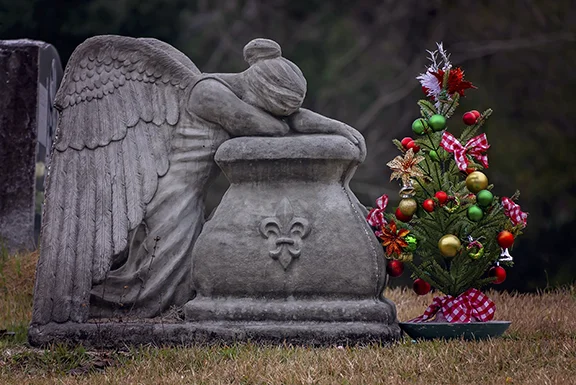
The end of the year is often considered to be a season of joy. Families gather, traditions return, churches celebrate, and calendars fill quickly. For many people, however, this time of year brings a quieter reality: stress, grief, loneliness, and emotional exhaustion.
As a healthcare provider, I have seen how emotional strain can affect the body. Stress is not “just in our heads.” It can interfere with sleep, increase muscle tension, worsen headaches and digestive symptoms, affect blood pressure, and make chronic health conditions harder to manage. Grief and loneliness can also influence the way we eat, move, sleep, and care for ourselves.
Research continues to demonstrate how closely our emotional, social, and physical health are connected. A 2024 systematic review by D.W. Sherman found associations between social isolation and poorer physical health, frailty, sleep disruption, cognitive decline, inflammatory changes, and increased mortality risk. Another systematic review published in 2025 in the Journal of the American Geriatrics Society examining widowhood found loneliness often rises sharply after the death of a spouse, particularly during the period immediately following the loss.
For Christians, experiencing grief, stress, or loneliness does not mean that our faith is weak. Scripture never asks us to pretend that pain is not painful. Instead, the Bible repeatedly acknowledges human sorrow while reminding us of God’s presence within it.
Psalm 34:18 tells us “The Lord is close to the brokenhearted.” This verse does not promise grief disappears quickly. It reminds us we are not abandoned while walking through it.
As the holidays approach, some people find it helpful to give themselves permission to simplify. Attend fewer gatherings, adjust traditions, or allow more room for rest. For someone who is grieving or emotionally exhausted, a quieter holiday can still be a meaningful one.
Maintaining basic routines may also provide a sense of steadiness. Regular meals, adequate hydration, taking prescribed medications consistently, gentle physical activity, and protecting sleep can all support the body during emotionally demanding seasons. These habits may not remove grief or stress, but they can offer a little structure when life feels less predictable.
Connection matters too, although loneliness is not always solved simply by being around more people. Some people feel lonely even in a crowded room. Meaningful connection is more helpful than simply staying busy.
Consider reaching out to one trusted friend or family member. Attend a church gathering or grief-support group. Volunteer. Invite someone who may also be alone to share a meal. Sometimes offering companionship to another person creates a healing connection for both people.
Galatians 6:2 encourages believers to “carry each other’s burdens.” That calling works both ways. We are meant to help carry the burdens of others, but we can also allow others to support us.
Grief deserves special patience at year’s end. An empty chair, a familiar song, a holiday recipe, or an old family tradition can suddenly bring memories rushing back. There is no single timetable for grief, and emotions may change from day to day.
Rather than judging yourself for those emotions, allow room for them. Remember the person you miss. Tell stories about them. Pray. Cry if you need to. Perhaps create a new tradition in their memory. There is no wrong way to honor the memory of lost loved ones.
It can also be helpful to recognize when additional support may be needed. Persistent hopelessness, overwhelming anxiety, difficulty managing normal daily responsibilities, major changes in sleep or appetite, increasing reliance on alcohol or other substances, or thoughts of self-harm are all reasons to consider reaching out for professional support. Seeking help is not a failure of faith. Sometimes care comes through the people God has placed in our lives, including pastors, counselors, friends, family or mental health professionals.
As the year closes, perhaps the goal does not have to be finishing strong.
Maybe it is enough to finish gently.
We can acknowledge what we have lost, remain grateful for what we still have, care for the bodies God has given us, and allow others to walk beside us.
The holidays may not look the way they once did. Life changes. People we love may be absent. Circumstances may be difficult.
But even within grief and loneliness, there can still be moments of connection, purpose, rest, and hope.
And for the believer, there is this assurance: when our hearts are heavy, God is not standing at a distance. He is near.
Yesenia Ramos, DNP, MSN, AGPCNP, APRN, NP-C, is a Doctor of Nursing Practice who owns Primary Care & Functional Medicine Consultants, LLC located at 508 Airport Road, STE D in Panama City, FL. She can be reached at (850) 215-5830, or through her website: primary-care-& functional-medicine.square.site. Find her on Facebook at Nurse Practitioner Yesenia Ramos.
Disclaimer: This article is for general educational and encouragement purposes only and is not a substitute for personalized medical or mental health care. If you are struggling with persistent emotional distress, changes in your physical health, or concerns about your safety or well-being, please consider speaking with your healthcare provider, counselor, pastor, or other qualified professional to guide you based on your individual needs.