
Ants show up at picnics, bees buzz about flower gardens, and mosquitoes prey upon campers. One insect, though, remains firmly associated with the great indoors—moths. They are thought to hang out in dark closets and attics, munching on clothing and fabrics. What could moths possibly teach humans? Surprisingly, these insects offer valuable life lessons about material possessions—as well as finding the correct path.
Moths belong to a group of winged insects of the order Lepidoptera. Although they make up 90% of that order, another family member, the butterfly, overshadows them. Visually appealing butterflies—which are delicate and colorful—attract more attention than stouter-bodied moths with dark-patterned wings and dull hues. However, not all moths have a drab appearance. Some species, such as the Giant Silkworm Moth, display spectacular patterns and colors. In fact, the Sunset Moth from Madagascar is often considered the most beautiful insect in the world.
Other differences exist between moths and butterflies. Most butterflies, for example, fly by day, while moths are typically nocturnal creatures. Butterflies sport thin antennae with small balls or clubs at the end, but moths display feathery antennae with nothing on the tip. Additionally, according to scientists, moths have been around longer than butterflies.
A moth’s life span is a mere two to four months. Nevertheless, throngs exist throughout the world with an estimated 160,000 different species identified. The winged creature appears on every continent except for Antarctica and lives in various habitats except for polar ones. During a moth’s short life cycle, it undergoes four stages: egg, larva (familiarly known as a caterpillar), pupa (in a cocoon), and adult. The larvae can do great damage to ornamental trees, shrubs, and many other agriculturally important plants. For instance, in the northeastern United States, spongy moth larva—an invasive species—severely damage forests by stripping trees bare of leaves as they eat. On the positive side, moths serve a vital pollinating role for numerous flowering plants, especially those which bees do not visit. In Africa, the larvae of many moth species provide a food source.
Most moths feed on plant matter, but a few are carnivorous. Additionally, some species eat wool, fur, silk, leather, and feathers. Among those moths are the so-called “clothes moths” found almost exclusively in indoor environments. Their diet requires keratin—a protein found in animal-based fibers. A clothes moth eats only household textiles and organic debris like pet hair.
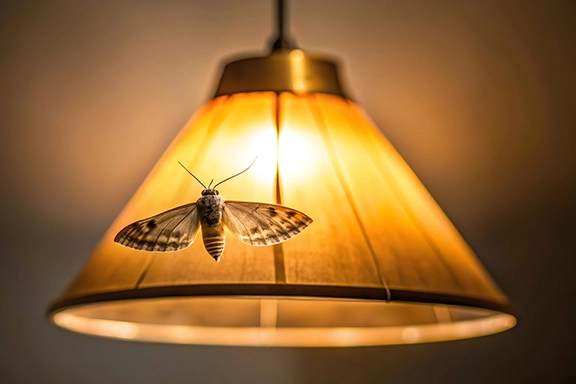
Moths are known for their attraction to light. This behavior occurs because the insects fix their flight paths in relation to bright heavenly objects such as the moon and stars. In a process known as phototaxis, these winged creatures move toward light sources. Moths use that light for navigation and attempt to correct their flight paths by getting closer to the light source.
Biblical writers knew about moths and referenced them. Beleaguered Job, in a conversation with God, noted that “man wastes away like something rotten, like a garment eaten by moths” (Job13:28, NIV). Similarly, the prophet Isaiah wrote that his condemners would “all wear out like a garment; the moths will eat them up” (Isaiah 50:9, NIV).
New Testament passages use moths to emphasize the temporary nature of worldly possessions. Addressing self-centered and self-indulgent rich people, James proclaimed, “Your wealth has rotted, and moths have eaten your clothes” (James 5:2, NIV). Jesus Himself spoke of moths in the Sermon on the Mount. He warned His listeners not to store up treasures on earth “where moths and vermin destroy” (Matthew 6:19, NIV). Instead, His followers were advised to store up treasures in heaven where no such destruction occurs.
Moths demonstrate the value of looking to the light for direction. They navigate with light and use it for course correction. Jesus promised His followers they would not walk in darkness. Believers can turn to the Light of the World, as Jesus called Himself in John 8:12, for the same assistance in navigating their way through life and correcting course when needed.
Although small and seemingly insignificant, moths offer powerful life lessons for Christians. They emphasize the temporal nature of material things, which these winged creatures can destroy. Being close to a light source improves these insects’ success in navigating the darkness of life just as a Christian’s closeness to Jesus lights the path of his or her faith journey. Perhaps God created moths to teach humans about possessions and paths.