
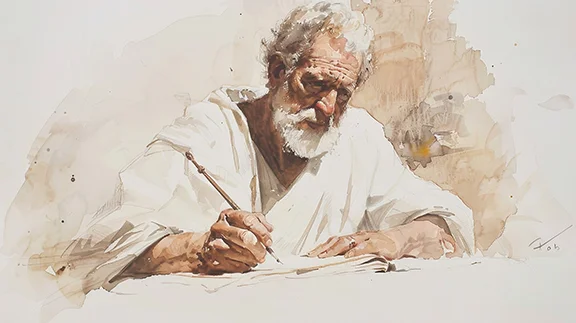
The title of this book comes from the opening line: “The Revelation of Jesus Christ”. It is the last chapter in the Bible – a book written by the Apostle John based on revelation from God the Father to God the Son to John and then to the world. It is arguably the most controversial and debated book in the Bible and the last book to be adopted into the New Testament due to such controversy.
The first three chapters are written to seven churches existing at the time of John – Ephesus, Smyrna, Pergamos, Thyatira, Sardis, Philadelphia, and Laodicea. Much has been written about the purpose of these writings; theologians typically identify the first objective was to communicate with the literal churches and meet their needs at that time. The second purpose is to reveal seven types of individuals/churches throughout history and instruct them in God’s truth. Each of the seven depicts struggles we and all churches face at one time or another.
First up, the church in Ephesus. Their relationship with God takes me back to the soulful song by Diana Ross, “Oooh, oooh. Oooh, I’m missing you. Tell me why the road turns”. All was good – the city was popular and profitable, full of theaters, libraires and philosophers. John spent years there, and Paul even wrote a letter that made it in the Bible. Like an old football coach, Jesus says to Ephesus and to us, I know how hard it is to be faithful in a lost world – I see your taking the punishment and ridicule from the enemies, but…you ran away. The love is gone.
So, what’s the cure? Jesus says, “remember” (Revelation 2:5). Think back – remember our love and come back; step two, repent of sins and lastly to do the first works – remember how you used to spend time in His Word – how you used to pray – the joy in getting together with other Christians – excitement from sharing the gospel.
John wrote what happens if they refused – God removes His light and presence. Honestly, is there no other greater pain or severe a loss? The danger for this kind of church is it may continue, even prosper, but inside it’s dead.
Smyrna, Homer’s birthplace, was a rich, beautiful, and proud city committed to idolatry and worship of Roman gods. Jesus applauds the church’s poverty in such a rich city. He gives them a peptalk forecasting persecution in Ephesus, but to what end? Testing proved to be good. It’s no accident that this is the only church that survived.
Pergamos was the political capital of the Roman providence for hundreds of years. It was high in culture having a great library with more than 200,000 books – second only to the great Library of Alexandria. If ever there was a pagan city, it was Pergamum. So bad that Jesus actually calls it Satan’s Throne (Rev. 2:13).
There is a dark connection from this throne to the altar constructed by Hitler. In the 1930s, Hitler heard about the excavation of the Altar of Zeus and had it shipped to Berlin where it was reconstructed at Zeppelin Field for his Nazi rallies. Hitler delivered his speeches from the Throne of Satan.
Jesus comes with two-edged sword in his mouth to cut away the lost from believers (Revelation 1:16). Jesus begins with encouraging words – the believers in Pergamum lived in a difficult place, surrounded by pagan influences, yet they held fast to Christ’s name and did not deny Him during difficult times.
Yet, Jesus condemned their weak faith in allowing members to teach and lead sinful ways. Even through God’s Word clearly prohibited these practices, Satan used these groups to compel the believers to compromise their godly convictions. As with other churches and with us, Jesus compels repentance – a change of mind that results in a change of behavior.
The church at Thyatira. This is the longest of the seven letters, even though written to the smallest church. It is in some ways the most complex of the seven letters. In history, we have no record that Christians suffered any significant religious persecution. The elder Pliny dismisses Thyatira in the almost contemptuous phrase ‘Thyatira and other unimportant cities.'”
Acts 16 tells of a woman named Lydia. “A certain woman named Lydia from the city of Thyatira, a seller of purple fabrics, a worshiper of God was listening, and the Lord opened her heart to respond to the things spoken by Paul.” Her home was Thyatira. She was a seller of purple. She was in the textile industry there. She heard the Apostle Paul and was converted and went on to support his ministry.
There was another woman that was just the opposite. The center of the corruption at the church at Thyatira is a woman Jesus calls Jezebel. This may not have been her literal name, but a “title” that clearly represents a self-styled prophetess within the church. The name Jezebel had a powerful association. If we called someone a “Judas” or a “Hitler” it would means something wrong and evil.
Their weakness won out. By the end of the second century there was no church in Thyatira. The problem that faced this little church was not persecution. The real problem was that they had fallen on the inside. This religious leader was telling them: “You must do these sinful things to keep your job – to stay in the trade guild and it’s only your body – not your spirit – God won’t mind.” Very familiar today.
Yet Jesus pleads to the church to hold on – to repent. Same for us today – hold on church – Jesus is returning, and you will be rewarded. Don’t choose her way – I know it’s easy and fun but – choose Jesus.
Church of Sardis. It was a large city with wealth and idolatry. Sardis was labeled a dead church. Smyrna was dead but alive – Sardis was alive but dead. And yet in this dead church there were true believers and the Lord has written their names in the Blood of Life. Six times in Revelation God refers to the book of life. (Revelation 20:12-15)
Church in Philadelphia – means Brotherly Love. The message to Philadelphia has captured the imagination of Christians as it is so rich in promises. Yet great conflict existed among the Jews and Christians. The Jews of Philadelphia were persecuting Christians and so are called a “synagogue of Satan” (Revelation 3:9).
Doors and keys are important in this message to Philadelphia. John wrote that Christ is the One “who holds the key of David. What he opens no one can shut, and what he shuts no one can open” (verse 7). Because the church in Philadelphia has kept faith with Jesus, he will keep them from “the hour of trial that is going to come upon the whole world to test those who live on the earth” (3:10).
Laodicea: The Complacent Church. Jesus says not one positive thing about this church and yet we get some of the most famous verses in Bible. In spite of their evil, He loves them. This church was spiritually arrogant in its self-satisfaction. God gives his famous Lukewarm analogy – ironically the actual water to this city came via aqueduct that was miles away causing the water to be lukewarm by the time it arrived in the city. These people knew lukewarm – how bad it tasted – bland – unsatisfying.
A church of fence-sitters. Neither excited for, nor antagonistic toward the Lord. Is there any soul harder to reach than the one who has just enough of Jesus to think they have enough? The church of Laodicea exemplifies empty religion.
“Cold makes us shiver, and great heat causes us pain, but a tepid bath is comfort itself. Such a temperature suits human nature. The world is always at peace with a lukewarm church, and such a church is always pleased with itself.” (Spurgeon)
God says to this church and to people like it – I will spit you out. You are a city of spiritually wretched, miserable, and poor. God says turn from your indifference – there is still time – and he offers arguably the most famous invitation in the entire bible: a knock at the door of your heart.
This is the worst of the seven Churches, and yet the most eminent of all the promises are made to it, showing that the worst may repent, finally conquer, and attain even to the highest state of glory
As we finish Ch 3 of Revelation we can all learn something from each church – each warning, praise, promise or hope. Next issue we dig into the actual future as revealed to John. Stay tuned.
Derrick Bennett is teaching pastor of The Ark Church in Panama City Beach, Florida.